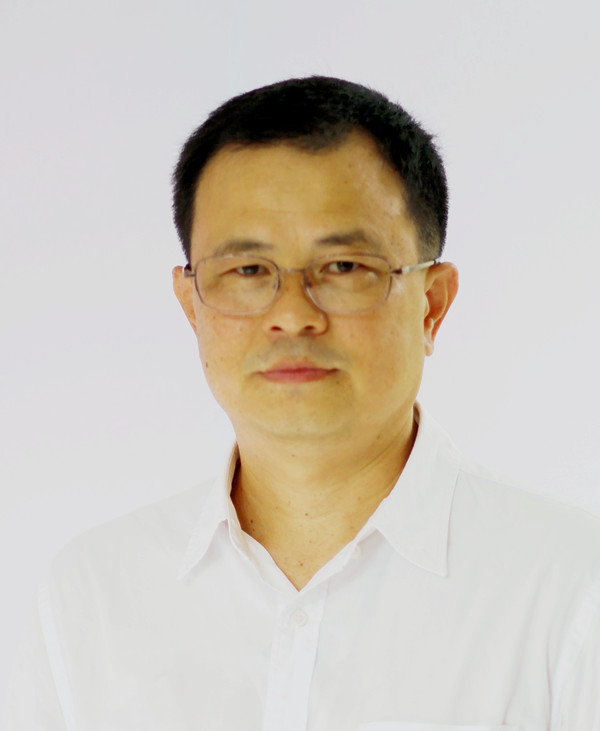
He was born
in South Korea and earned his
Ph.D. from Gifu University in
Japan. Currently, he works at
the Muroran Institute of
Technology. He also completed
his administrative
responsibilities as a Research
Fellow at the University of
Central Florida, USA.
His research focuses on the
biodegradation of pollutants,
including petroleum, chlorinated
inorganic compounds (such as
PCE, TCE, and PCBs), and
endocrine disruptors like
Bisphenol A and
4-tert-butylphenol. Recently, he
has been concentrating on
biopolymer production
(bioplastics) using biomass and
CO2.
His contributions to research
and his fellowship training have
garnered several awards,
including honors from the
Secretary of Korea's Ministry of
Construction & Transportation
and the Secretary of Korea's
Ministry of Science &
Technology.
In addition to his research, he
serves on the editorial boards
of several esteemed journals,
including the Journal of
Environmental Science and
Engineering Technology
(Editor-in-Chief), Applied
Biochemistry and Biotechnology
(Assistant Editor), Frontiers in
Bioengineering and Biotechnology
(Associate Editor), and
Processes and Water-Energy
Nexus.
He is also an expert reviewer
for a range of journals,
including Green Chemistry, RSC
Advances, Bioresource
Technology, and many others.
Additionally, he reviews
projects for the National
Science Centre in Poland and the
National Research and
Development Agency (NEDO) in
Japan.
Speech title "Production of Biodegradable Plastics Using Non-Competitive Carbon Feedstock"
Abstract-This research addresses a critical
challenge in biodegradable plastics production: high feedstock
costs, which represent approximately 35% of total production
expenses. While bioplastics currently account for only 0.5% of the
435 million tons of plastic produced annually, their adoption is
hindered by costs that are 2–5 times higher than those of
conventional plastics.
The study explores non-competitive carbon sources that do not
compete with conventional biomass resources, specifically focusing
on waste aromatic compounds and industrial exhaust gases containing
CO₂. This approach aligns with Japan’s 2050 carbon neutrality goals
and supports the Green Innovation Fund initiative, which has
allocated 176.7 billion yen for carbon recycling technologies.
The research demonstrates the successful isolation of
high-concentration phenol-degrading bacteria from rhizosphere soil
and activated sludge. Strain C2, isolated from the plant
rhizosphere, achieved degradation of phenol at concentrations
significantly higher than those of typical bacterial strains. The
phenol degradation pathway was characterized, showing conversion
through metabolic intermediates ultimately producing CO₂.
Critically, the final degradation product (CO₂) was successfully
converted into the biodegradable polymers PHB and PHBV through
fed-batch culture using mixed gases. The extracted polymers showed
thermal properties comparable to those of commercial products. This
zero-emission upcycling approach transforms phenol
wastewater—traditionally viewed as a pollutant—into a valuable
resource, potentially recovering 12,000 kWh/year of energy and
reducing 5.4 t-CO₂/year, while supporting decentralized production
systems across Japan’s expanding hydrogen station infrastructure.

Dr. Hyunook
Kim is Professor at
Environmental Engineering,
University of Seoul, Korea, and
Director of R&D Center of Core
Technologies for Water
Treatment. Professor Kim earned
his B.S. degree in Environmental
Science from Yonsei University,
Korea in 1994, and an M.S.
degree in Environmental
Engineering from Johns Hopkins
University in 1997, and a Ph.D.
from University of Maryland at
College Park in 2000. Before he
joined the faculty member at
University of Seoul in 2002, he
worked as Environmental Engineer
for US Dept. of Agriculture, MD,
USA.
Professor Kim’s research in the
area of water pollution control
includes a number of projects on
process control and operation of
water and wastewater treatment
plants. Especially he is
interested in monitoring and
control of contaminants of
emerging concern. He has
published numerous journal
papers and made conference
presentations. He has been
received a few awards for his
academic and research
achievements.

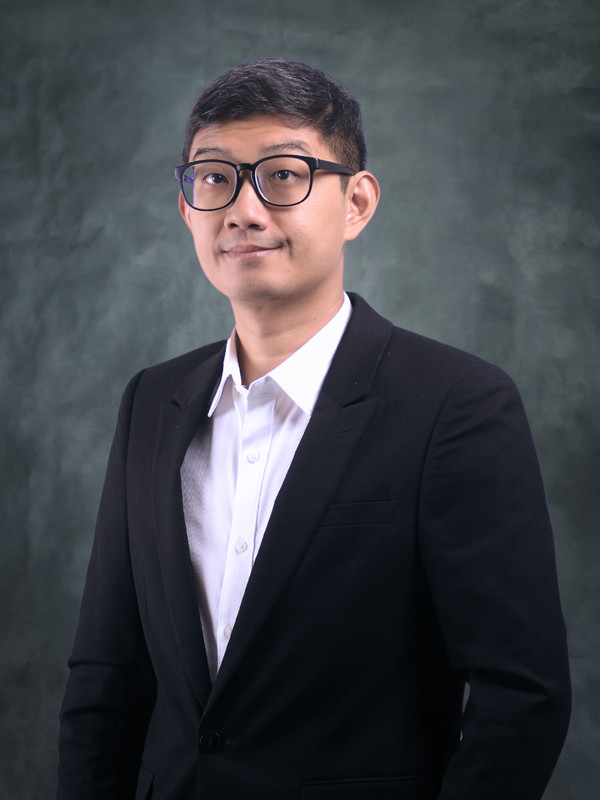
Prof. Dr. Wanida Kanarkard graduated with second class honors in Computer Engineering from Khon Kaen University, Thailand. She further pursued her academic journey with a master’s degree in Advanced Computing from Imperial College London, UK, and Ph.D degree in Computer Engineering from the University of Hertfordshire, UK. Her academic journey was further enriched by postdoctoral research in Mobile Computing at the National Institute of Informatics (NII), Japan. Since joining Khon Kaen University in 1995, Prof. Dr. Wanida has been a driving force in integrating digital innovation with urban and environmental sustainability. As the Director of the Smart City Operation Center, she has spearheaded initiatives to transform the university into a Green Campus, focusing on energy efficiency and environmental stewardship. Her pioneering work extends to the development of smart cities across Thailand, where she leverages digital technologies to advance the circular economy, particularly in waste management—including plastic, industrial, electronic, and biomass waste—turning challenges into valuable opportunities. With numerous internationally published research papers and a few awards to her credit, reflecting her commitment to bridging technology, sustainability, and societal impact.

Dr. Hyo Choi
is meteorologist, environmental
scientist and physical
oceanographer with over 40 years
experiences in numerical
modeling researches as Overseas
invited senior researcher (by
Korean Government) of Korea
Ocean Research & Development
Institute (KORDI; now KIOST),
Korea Advanced Institute of
Science & Technology (KAIST),
Ministry of Science &
Technology, a High
level-finserly researcher (two
times nominated by President of
Korean Government) of National
Fisheries & Research Development
Institute (NFRDI), Ministry of
Maritime Affairs & Fisheries,
Korea, and Full Professor
(nominated by President of
Korean Government) of
Gangneung-Wonju National
University, Korea.
He obtained 2 Ph.D. degrees from
USA (Dept. of Civil Engineering,
University of Texas at Austin,
TX; 1984) and China (College of
Environmental Sciences, Peking
University, Beijing; 2004). His
research interests cover a
variety of fields in
Meteorology-(Weather and climate
change, Severe weather and
disaster-Wind storm, Snow storm,
Flood and Fog, Cyclogenesis and
Tropical cyclones),
Environmental Science &
Engineering-(Health GIS and
Modeling, Air pollution modeling
and data analysis), and Physical
Oceanography-(Ocean wave &
circulation modeling, Ocean
environment modeling for
fishery), Oceanic internal
waves, Upwelling,Chlorophyll-a
blum) in collaboration with
universities and government
institutions in Korea, USA,
Canada, United Kingdom
(England), Russia, Germany,
France, Belgium, Hungary,
Nigeria, Iran, Turkey, India,
Sri Lanka, Mianma, Australia,
Thailand, Malaysia, Singapore,
Hong Kong, Taiwan, China, Japan,
Chile and Mexico, etc..
He acted not only as Interpreter
and Scientific Investigator of
Korean Antarctic Scientific
Expedition Team two times
(Nov.~Dec., 1985~April~May,
1987) before establishing the
Korea Antarctic Scientific
Station but also as Korean
Government Representative for 1)
Scientific Committee on
Antarctic Research (SCAR)
Meeting (Sandiego, USA; 23~27
June 1986), and 2)
Inter-governmental Meetings on
Antarctic Treaty and Science
Policies (Racine, USA); June
1986), and further he tried to
visit and obtain the Antarctic
Treaty Parties's cooperation. He
was awarded the National Order
of Civil Merit-Mogryeon Medal
from the government for his
great contribution to the
accession of the Korean
Government to the Antarctic
Treaty (1986; His age was 37).
He has been Council member of
Ministry of Environment,
Ministry of Maritime and Fishery
Affairs, Ministry of Education,
and Ministry of Science &
Technology of Korean Government,
and Evaluation (or Deliberation)
Committee Members of institutes
istablished by Korean Government
(Korean Science & Engineering
Foundation (KOSEF), Korea
Research Foundation (KRF),
National Research Foundation
(NFR), Korea Institute of
Science & Technology Information
(KISTI), National Institute of
Environmental Research
(NIER),Korea Hydrographic &
Oceanic Agency (KHOA), National
Fishery Research & Development
Institute (NFRDI), etc.) and
Provincial Governments of Korea.
He has performed his duties on
President of Korean
Environmental Sciences Society
for 2 years (2002~2003),
President and Vice President of
Asia-Oceania Geosciences Society
(AOGS; 60 nations; Singapore
-Atmospheric & Oceanic Sciences
sections) for 5 years
(2005~2009) and Deputy Director
General of International
Biographical Centre (UK)
(2005~2009). He has been
Director General of East Sea
Regional Research Institute
(1989~1991) and Dean of the
Graduate School, Gangneung-Wonju
National University two times
(2009~2011, 2011~2012). In
present, he is Director General
of Atmospheric & Oceanic
Disaster Research Institute,
Korea (2014~present), High-end
Foreign Expert of South China
Sea Institute of Oceanology,
Chinese Academia Sinica (CAS),
China (2015~present), Adjunct
Professor of Zhejiang Ocean
University, China (2013~present)
and Intergovernmental
Oceanographic Commission (IOC)
of UNESCO—WESTPAC Working Group
Member on Tropical Cyclones,
etc.
He has been also acting as
Editor-in-Chief of 15
International journals (USA,
Singapore, India, Korea) and
Editor of 35 ones (USA, United
Kingdom (England), Switzerland,
Italy, Singapore, India,
Nigeria, Canada, Hong Kong) in
the fields of Environment &
Pollution, Disaster,
Agriculture, Water resources,
Hydrology, GIS, Physical
sciences, Fluid Mechanics, Civil
Engineering, Oceanography, Ocean
Engineering, Fishery and
Meteorology. He has served as
not only Committee Member,
Keynote Speaker, Invited Speaker
and Plenary Lecturer but also
more than 100 times Session
Chair or Convener of many
International Conferences in the
world. Thus, he is very fluent
to control both scientific and
administrative affairs and to
construct international
networks.
Speech title "Comparative Analysis of Hybrid Deep Learning Frameworks for Forecasting Ground Level Air Quality in an East Korea Urban Area"
Abstract-This study presents hybrid deep learning frameworks based on neural network (ANN) models that combine Sigmoid (sigmoid) and Hyperbolic (tanh) activation functions to predict hourly average ground-level urban air quality states in a eastern coastal city (Gangneung) of South Korea, using additionally the HYSPLIT model for air particle back-trajectory and 3D-WRF meteorological model for wind field. The ANN models of MLP with a back-propagation training algorithm for error calculation with 15 nodes in each of two hidden layers were performed using 15 input variables of 1,455 data, which combined PM, gas, and meteorological data of Gangneung city, affected by PM and gas in the upwind site, Beijing city, China. Two models’ forecasting abilities were assessed to calculate root mean square error (RMSE) and the coefficient of determination (R²) between the predicted and measured values, using 60% (20%; 20%) of total input data for the model training (testing, validation). The values of R2 by ANN_(sigmoid-sigmoid+tanh) (ANN_(tanh-tanh+sigmoid) with 15 neurons in the two hidden layers were 0.846 (0.897) on PM10, 0.859 (0.880), on PM2.5, and 0.841 (0.785) on NO2, showing better prediction performance by the ANN_(sigmoid-sigmoid+tanh) model with higher values of R2. The predicted values of air quality states are very close to the measured ones through their scatter plots and hourly distributions, and also the importance (or contribution) of 15 independent variables to each of the output variables was presented.
Copyright © 2026 16th International Conference on Future Environment and Energy (ICFEE 2025). All rights reserved.